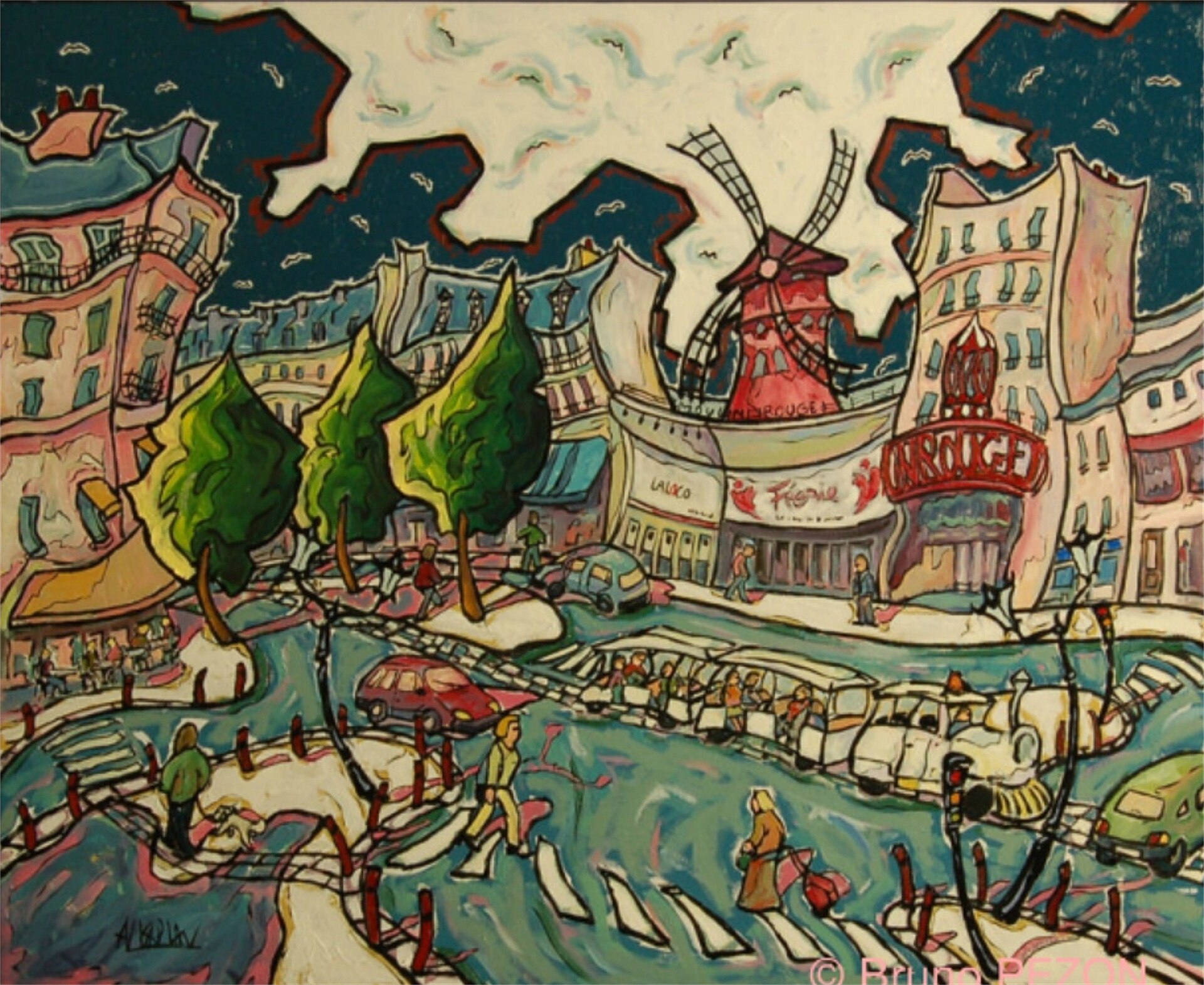
White Tablecloths & Silver Buckets
Twenty-five years of seating the parterre on Boulevard de Clichy — what the room taught me, written down for friends who keep asking.
For twenty-five years I stood at the top of the little stairs that lead into the grande salle of the cabaret on Boulevard de Clichy, a seating plan folded in my left hand and a smile already on my face. I have seated honeymooners and ministers, regulars who came every Friday for a decade and tourists who crossed an ocean for one evening. This site is simply my notebook — the things I would tell you over coffee if you sat with me at the Abbesses.
The room I worked in holds the memory of the nineteenth century quite deliberately: horseshoe parterre, small round tables, a balcony that wraps the stage like a dark red scarf. The evening runs on rails that have not changed in decades — dinner at seven, the grand revue at nine, a late performance at eleven. Each hour has its own temperature, its own clientele, its own small tricks. That is what these pages are about.
| Hour | Mood in the room | Who it suits |
|---|---|---|
| 19:00 — dinner | Unhurried, candle-lit, the orchestra warming up behind the curtain | Couples, anyone who wants the full ritual |
| 21:00 — grand revue | The full house, the feathers, the famous numbers | First-timers; the classic evening |
| 23:00 — late show | Looser, quieter, the room at half-light | Locals, night owls, second visits |
I retired in the spring of my sixtieth year and walked out onto Place Blanche with a cardboard box containing one brass table number, three fountain pens and a folded copy of the last seating plan I ever ruled by hand. My son said I should write things down before the details went the way of the box. He was right. So — these notes.
Nothing here is official. I do not speak for the cabaret, I have no contact with its management, and I certainly sell nothing; I would not know how. If you find the advice useful, that is thanks enough — drop a line to the postal address on the contact page, the old way. The maître d' is off duty now, but she still knows where the good tables are.
Why a website, friends ask me, when a letter would do? Because the questions repeat — where to sit, when to arrive, what the door expects, how the evening is built — and because a notebook on paper answers one person at a time. These pages answer whoever finds them. I have arranged them the way I used to arrange an evening: first the shape of the room and its three hours, then the practical matters of streets and trains and coats, then my honest opinions where honesty costs me nothing and helps you something. There is a page of questions people actually write, a page about me — brief, I promise — a postal address that still works, and the small legal courtesies every site owes its readers. Nothing on these pages is for sale. If a sentence here saves you an hour of queueing or a seat behind a pillar, the site has earned its keep.